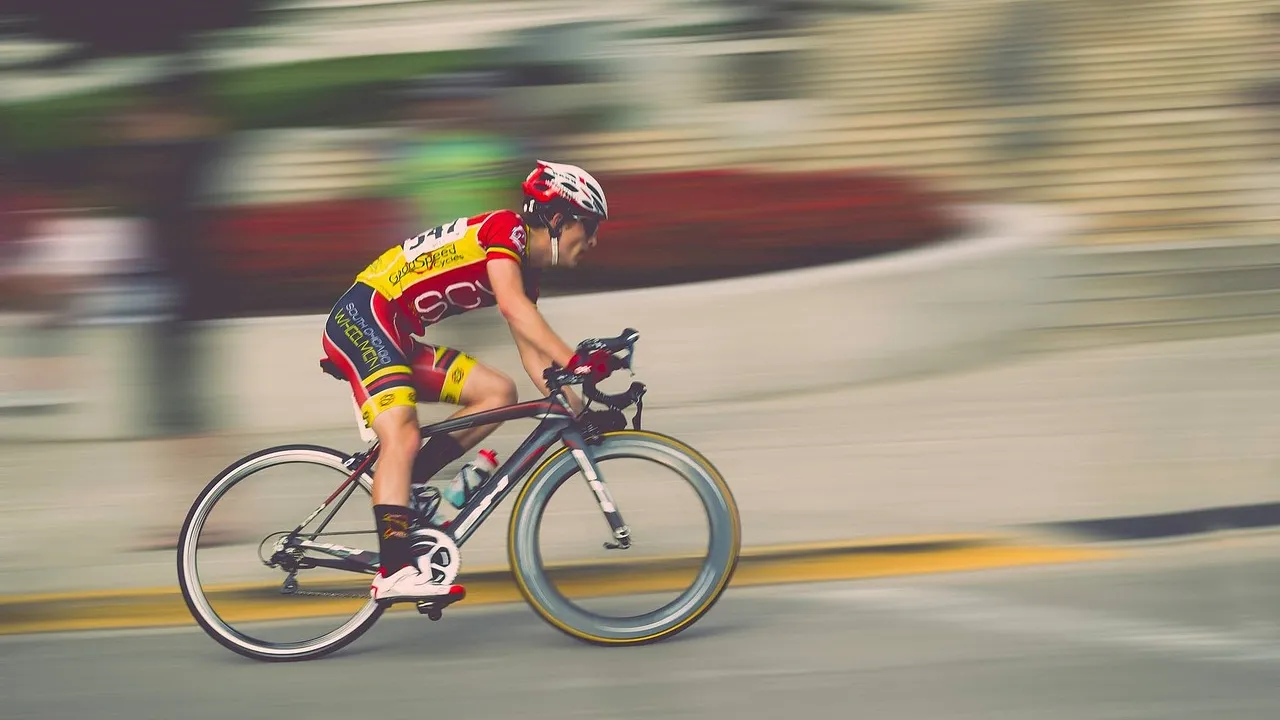
Beginner road cycling: saddle, helmet and progression
You have a road bike, or you plan to buy one, and you don't know where to start. How long, how often, which setting, which protection? Here is the order to set things up so your first rides make you want to keep going.
The KILYO team
The sports coach that reads your workouts

The short answer
To get started with beginner road cycling, aim for 150 to 300 minutes of moderate activity per week (WHO), building up gradually with short, regular rides. Set your saddle so your knee stays slightly bent at the bottom of the pedal stroke, and wear a helmet: in France, the law only requires it under age 12. You don't need a license to ride alone.
Key takeaways
- The WHO and U.S. guidelines set the same target for adults: 150 to 300 minutes of moderate activity per week.
- The literature recommends a knee angle of 25 to 35° at the bottom of the pedal stroke: a badly set saddle shows up in your knee.
- In France, a helmet is only mandatory under age 12. On average, studies observe 48% fewer head injuries among helmeted cyclists.
- To ride alone, you don't need a license. The FFC license is for club riding.
Road cycling is appealing because it gives you freedom fast: one hour on the road and you're far from home. It's intimidating for the same reasons. The vocabulary is technical, the gear is expensive, and everyone has an opinion on what to buy before you ride.
This guide goes in the reverse order. First the goal, then the three settings that really matter (bike size, saddle, helmet), then a progression over a few weeks. The rest can wait until your tenth ride.
Start with a health goal, not speed
For an adult, the World Health Organization recommends at least 150 to 300 minutes of moderate-intensity aerobic activity per week. The other option: 75 to 150 minutes of vigorous intensity, or an equivalent combination. The U.S. guidelines (Physical Activity Guidelines for Americans, 2nd edition) give the same range for adults: 150 to 300 minutes of moderate activity per week, plus muscle-strengthening activity.
In practical terms, 150 minutes could be three rides of 50 minutes. You won't get there in the first week: you build up to it gradually. If you've been inactive for a long time or have a known heart condition, check with a doctor before you start.
The minimum gear: a bike that fits and a helmet
A bike that fits you matters more than the quality of its components. Try it in a shop and have the position adjusted there rather than buying blind. Three checks don't need a formula: you can put your foot flat on the ground when you're stopped, your arms stay slightly bent on the handlebars, and you feel no tension in your shoulders or neck. If one check fails, ask for a nearby size or another setup.
The helmet deserves a real decision. In France, it's only mandatory for cyclists or passengers under 12, and the Sécurité routière strongly recommends it for everyone else. Rules vary from country to country, so if you ride somewhere else, check the rule where you are.
What does the research say? A meta-analysis (it pools the results of many studies) covering 55 studies, published in 2018 in Accident Analysis & Prevention, found an average of 48% fewer head injuries among helmeted cyclists, and 60% fewer serious head injuries. The helmet had no significant effect on neck injuries. The effects were stronger in solo falls, with no other vehicle involved, than in collisions. The largest review on the topic, by Olivier and Creighton (2017), looked at the same question for head, face, neck and fatal injuries.
Set your saddle before your first real ride
A saddle that's too high or too low shows up mostly in your knee. A study published in 2008 in the Journal of Strength and Conditioning Research notes that the literature recommends a knee angle of 25 to 35° at the bottom of the pedal stroke to help prevent injury.
In simple terms: with the pedal at the bottom, your leg is almost straight, but not locked. Your hips don't rock from side to side to reach the pedal. If your knee stays very bent, the saddle is too low. If your hips rock, it's too high.
Have someone photograph you from the side, pedal at the bottom, and check the knee angle. Change one setting at a time, in small increments, and test it on a ride. If it still pulls, don't push harder to compensate: shorten the ride and review your saddle height.
A 6-week progression, without burning out
The studies give the target: 150 to 300 minutes per week. Splitting that into workouts comes from coaching practice, not from a trial that validated it. Here's an example to reach the lower bound in six weeks, at an easy pace, one you could hold for a long time:
| Weeks | Rides per week | Length of each ride | Total per week |
|---|---|---|---|
| 1 and 2 | 2 | 40 min | 80 min |
| 3 and 4 | 3 | 40 min | 120 min |
| 5 and 6 | 3 | 50 min | 150 min |
Change only one thing at a time: either add a ride or add length, never both in the same week. If a week is hard (work, sleep, fatigue), stay at the previous week's load.
Once cycling becomes a habit, you can aim for the top of the range or add strength work. If your goal is triathlon, a three-workouts-a-week plan shows how to fit the bike in with the rest.
Ride safely
A beginner rarely falls because of speed. They fall from uneven braking, a corner taken too tight, a curb, gravel, or reaching for a water bottle.
A few simple habits:
- Stick to quiet, familiar roads for your first rides.
- Practice braking smoothly with both brakes before riding in a group.
- Follow your country's traffic rules: a bike is a vehicle like any other there.
What you can do on your next ride
- Check the bike size and saddle height before you leave.
- Put on your helmet, strap snug.
- Pick a calm route, one you can repeat twice a week.
- Write one sentence when you get back: knees, hands, back, fatigue.
If your watch records your rides, KILYO reads them and tracks your weekly volume against the 150-minute target, along with how consistent your weeks are. If you miss a workout or your pace rises too fast, it adjusts next week's plan.
Frequently asked questions
Do you need a license or a club to start?
Do you need clipless pedals from the start?
Do you need to do anything besides cycling?
My knee pulls at the end of a ride. What should I do?
Sources
- Bull F. C. et al. (2020). World Health Organization 2020 guidelines on physical activity and sedentary behaviour. British Journal of Sports Medicine. DOI
- U.S. Department of Health and Human Services, ODPHP (2018). Top 10 Things to Know About the Second Edition of the Physical Activity Guidelines for Americans. Official page
- Sécurité routière (2025). Helmets and protective gear for cycling. Ministry of the Interior (France). Official page
- Høye A. (2018). Bicycle helmets, to wear or not to wear? A meta-analyses of the effects of bicycle helmets on injuries. Accident Analysis & Prevention. Abstract ; Olivier J., Creighton P. (2017). Bicycle injuries and helmet use: a systematic review and meta-analysis. International Journal of Epidemiology. DOI
- Peveler W. W. (2008). Effects of saddle height on economy in cycling. Journal of Strength and Conditioning Research. PubMed
- French Cycling Federation (FFC) (2025). Getting a club license with the FFC. Official page
Written with the help of AI.